Triggers matter less than a clean definition of the customer journey. The practical challenge is deciding where to invest time without losing focus on the customer, data quality or maintainability.
Agree on who owns a lead at each stage.
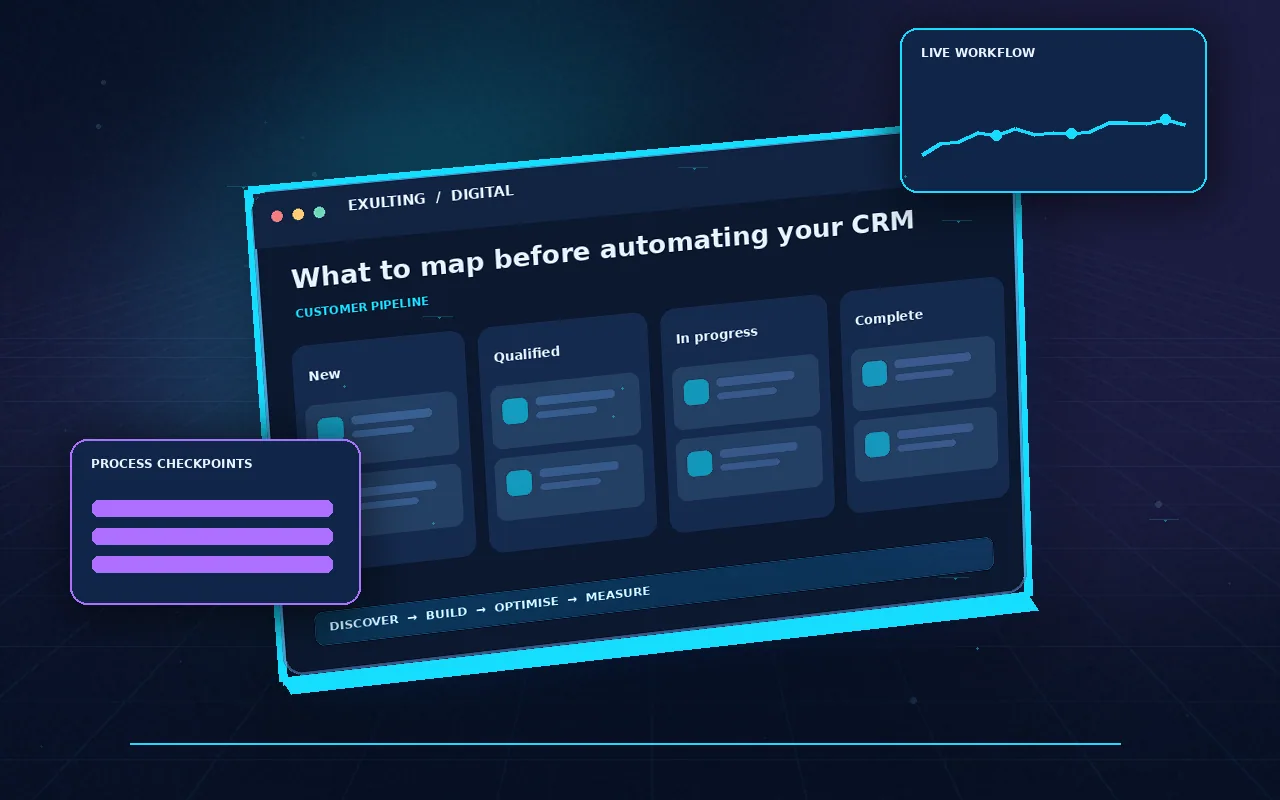
Map a real lifecycle rather than just fields. Decide when a lead becomes sales-qualified, how ownership changes and where an enquiry should go when the intended owner is unavailable.
Agree on who owns a lead at each stage.
Define consent, exceptions and the conditions that should stop a workflow.
A useful workflow contains both positive and negative paths. Ask what should happen if consent is withdrawn, a record is duplicated, a contact replies or an action fails.
Define consent, exceptions and the conditions that should stop a workflow.
Clean up duplicates and source fields before connecting tools.
A workflow will magnify bad data. Define required fields, deduplication rules, data sources and integration ownership before introducing automated changes.
Clean up duplicates and source fields before connecting tools.
Add monitoring, human handoff and a simple rollback method.
Test with realistic examples, use a sandbox if available, and monitor the first releases. Give operators a clear way to pause workflows and correct records without writing code.
Add monitoring, human handoff and a simple rollback method.
What to do next
Start with a short audit of current priorities, choose the highest-value problem and build a measurable plan. Keep ownership clear and document the decisions that will matter during the next iteration.